


The temperature climbs above 25°C, the humidity rises, and suddenly the watch you wear every day starts to feel like a problem. The leather strap that's been comfortable for ten months smells like a gym bag by mid-July. The steel bracelet you love in winter pinches every time your wrist swells in the heat. The leather you wore to the pool "just to take a quick photo" comes home with a permanent dark stain. By mid-August, half the people who own a serious watch are quietly leaving it in the safe and wearing something cheaper or nothing at all.
The fix isn't a different watch. The fix is a different strap, and the right summer strap costs a small fraction of what a second watch would. This guide covers why heat actually damages straps, which materials genuinely work in hot and humid conditions, the wrist-swelling problem most articles mention but never solve, summer travel scenarios (saltwater, chlorine, sunscreen, sand), and reference-by-reference recommendations for the most-bought luxury watches.
The short answer for most people: a quality FKM rubber strap is the single best summer upgrade. The longer answer covers when sailcloth, mesh, denim, and other options outperform rubber, and when they don't.
What Heat Actually Does to Watches and Straps
Three physical things happen to your wrist and watch in summer that fundamentally change which strap is right.
Your wrist swells. Skin and soft tissue expand when warm — typically 3–5% across the wrist circumference between cold-weather wear and hot summer wear. On a 175mm wrist, that's a meaningful 5–9mm of additional circumference. A leather strap fitted to a winter wrist will be visibly tight on a summer wrist; a steel bracelet fitted to a winter wrist will pinch. The right summer strap either accommodates this swelling (rubber stretches very slightly, mesh and NATO adjust easily) or has been sized with the swelling in mind.
You sweat more, and the sweat goes somewhere. The body produces between 500ml and 2L of sweat per day in normal heat, more in extreme heat or during exercise. A wristwatch sits over the radial artery and the wrist is naturally a high-perspiration zone. Whatever strap is on the watch becomes the destination for that sweat — it absorbs into porous materials (leather, fabric, suede), pools against non-porous materials (rubber, steel), and can chemically interact with the strap depending on the material (sweat is mildly acidic, with pH around 4.5–6.5).
UV exposure intensifies. A watch worn outdoors in summer gets several times the UV dose of the same watch worn in winter. UV breaks down the dyes and fibres of certain materials — leather fades, dyed fabric loses colour, low-quality silicone yellows, and even high-quality FKM has a finite UV resistance over years of intense exposure. Heat-tolerant materials with built-in UV resistance handle this; vulnerable materials don't.
The straps that fail in summer fail because of these three factors. The straps that succeed have been engineered specifically against them.
What Heat Does to Different Strap Materials
A material-by-material reality check.
Leather. Worst summer material by every measure. Sweat soaks into leather and accelerates the breakdown of natural fibres. Leather absorbs odour and starts to smell within weeks of regular summer wear. Sun fades the dye, often unevenly (the part of the strap exposed to sun fades while the part under your wrist doesn't, leaving a permanent two-tone strap). Repeated wet-and-dry cycles cause leather to crack and stiffen. A daily-worn leather strap that's good for 18 months in cool conditions might be visibly degraded after a single summer of heavy wear. Reserve leather for cooler months and dressy occasions where the watch isn't on your wrist for the full hot day.
Suede and ostrich. Even worse than calfskin in summer. Suede's nap absorbs moisture and never recovers shape. Ostrich is more durable than suede but the visible quill follicles trap dirt and salt that's hard to clean out. Both are autumn/winter materials — they shouldn't be on the wrist in summer.
Alligator. Slightly more weather-resistant than calfskin because of the dense scale structure, but still leather underneath the surface. Resist the temptation to wear alligator in summer just because it's your dressiest strap — sweat soaks the underside the same way it soaks calfskin, and you'll ruin a £300 strap in a single hot season.
FKM rubber. The textbook summer material. Sweat sits on the surface and rinses off with water. Salt water, chlorine, sunscreen, and skin oil all chemically inert against FKM. UV resistance excellent — premium FKM is rated for years of direct sun exposure without significant degradation. Doesn't stretch enough to compensate for major wrist swelling, but slight wrist expansion is absorbed by the natural flex of the strap. The single most flexible summer material.
Silicone. The cheaper alternative to FKM, and meaningfully worse for summer specifically. Silicone is more porous than FKM, which means it absorbs sweat odour over time and develops a permanent smell that washing doesn't fully remove. UV resistance is inferior — cheap silicone yellows in a single summer of heavy outdoor wear. Use only as a budget option on inexpensive watches; on luxury watches, the price gap to FKM is small enough that there's no reason to choose silicone.
Sailcloth. Excellent summer material. The synthetic woven nylon or polyester construction handles water, sweat, and UV well. Lightweight, breathable, and visually right for summer — sailcloth has the marine register that suits boats, beaches, and casual summer wear. Slightly less waterproof than rubber for serious swimming, but more breathable and more comfortable in pure heat. The textbook in-between summer material.
NATO/Perlon/woven nylon. Strong summer choice for casual register. The single-pass nylon construction lets sweat pass through and dry quickly. Can be hand-washed with soap to remove odour buildup. Tends to be inexpensive (£10–£40 typical), so colour rotation is cheap. Downsides: NATO sits the watch noticeably higher off the wrist (because the strap passes underneath the case), the nylon shows wear on the pass-through points, and saltwater leaves a faint white residue if not rinsed promptly. Best for casual summer wear and as a £20 backup option, not as the primary summer strap on a luxury watch.
Steel bracelet. Doesn't absorb sweat, but holds heat against the wrist and pinches when the wrist swells. Most luxury bracelets (Rolex Oyster, Tudor T-fit, AP integrated) have micro-adjustment systems specifically for this — Rolex's Glidelock adds 5mm of stepped extension, the Easylink adds 5mm with a single click, AP's clasp has internal adjustment. If your watch has micro-adjust, the bracelet is workable in summer. If it doesn't, expect tight wear on hot days.
Steel mesh. Better than solid bracelets in summer because the small mesh gaps allow some breathability. Most mesh bracelets also have sliding adjustment that handles wrist swelling cleanly. Visually slightly less formal than a solid bracelet — better suited to dive watches and sport watches than dress watches.
Denim. Surprisingly good summer option for casual register. Cotton denim breathes well, absorbs and releases moisture quickly, and looks right for weekend summer wear. Requires more drying time than rubber after water exposure but works fine for hot-but-dry conditions.
The Five Best Summer Strap Configurations
If you're building a single summer strap (or upgrading one to be summer-ready), these are the configurations that actually work.
1. Premium FKM rubber, light to mid colour. The definitive single summer strap. Black FKM works but holds heat; lighter colours (white, navy, light grey, sand, olive) reflect more heat and feel measurably cooler in direct sun. Curved-end fit cut for your specific watch reference if available. Quick-release spring bars so you can swap in 30 seconds. Helvetus's curved-end FKM rubber range covers the major colours and most luxury references.
2. Sailcloth in marine colours. The dressier-than-rubber alternative. Navy, charcoal, sand, or off-white in a leather-lined sailcloth construction. Pairs particularly well with dive watches (Submariner, Black Bay, Pelagos, Speedmaster) where the marine character of the strap is part of the appeal. Helvetus's MarinerTex sailcloth is leather-backed for comfort.
3. CTS cut-to-size FKM rubber. Solves the summer wrist-swelling problem better than any other option. CTS straps are designed to be trimmed to your exact wrist length — the same principle Patek uses on the Aquanaut. You can re-trim or adjust the length as your wrist changes through the season. Helvetus's CTS rubber range is the textbook summer-rotation product.
4. Steel mesh bracelet. For owners who want to stay metal but need something more forgiving than a solid bracelet. A Milanese mesh in 316L steel gives you the metal aesthetic with much better breathability and easy sizing.
5. NATO or perlon for casual summer. The £20 budget option that genuinely works for casual wear, beach days, and travel. Easy to wash, easy to swap, easy to replace if it fades or frays. Best on dive watches and field watches; less ideal on dress watches or formal sport watches.
The Wrist-Swelling Solution
Most summer strap articles mention that your wrist swells in summer and then move on without telling you what to do about it. Here's the actual fix.
The amount of swelling depends on your individual physiology, hydration, salt intake, and how hot it actually gets. Most adults experience 3–9mm of additional wrist circumference between cold winter and peak summer. That's about one to two strap holes' worth of difference. The solutions:
For tang-buckle straps: The simplest solution. You move up one or two holes from your winter setting. Make sure your strap has enough holes to accommodate this — if you wear at the second hole in winter and your wrist swells enough to need the fourth hole in summer, you're at the centre of the strap. If your strap only has 6 holes total and you're already wearing at the largest in winter, the strap is too short for summer. Size up next time.
For deployant clasps: Most fixed-length deployants don't accommodate seasonal swelling well. The exceptions are micro-adjust deployants (Rolex Glidelock, Omega's diver extension, Cartier QuickSwitch, AP's adjustable clasp) which have built-in extension mechanisms. If your strap has a fixed-length deployant and your wrist swells noticeably, consider switching to a tang-buckle strap for summer specifically.
For OEM bracelets: Use the micro-adjust if your bracelet has one (Rolex Glidelock, Easylink, AP and Patek integrated systems all do). Pop out the half-link if you've previously taken one out for winter sizing. If your bracelet doesn't have any adjustment, consider switching to an aftermarket strap for summer and putting the bracelet back on in autumn.
For CTS straps: Trim slightly long for summer specifically — about 5mm extra circumference. The strap can be retrimmed shorter again in autumn if needed.
General rule: Buy summer-specific strap rotation slightly larger than your winter sizing. A strap that fits perfectly at the third hole in February will be at the fifth hole in August on the same wrist. Plan for it.
Summer Travel and Activity Scenarios
The actual summer activities your watch will see — and the right strap for each.
Beach and ocean. Saltwater is the test. FKM rubber handles it without any consequence (rinse with fresh water afterward). Sailcloth handles it well but takes longer to dry. Steel mesh and bracelets handle saltwater fine but accumulate salt deposits in the gaps that need rinsing. Avoid all leather. Avoid silicone (yellows from saltwater + UV combination). The standard pick: FKM rubber in a light or marine colour.
Pool and chlorine. Chlorine is harsher than saltwater for some materials. FKM is fully chlorine-resistant. Steel bracelets handle chlorine but the gold/PVD finishes can degrade with repeated exposure. Sailcloth tolerates chlorine but the colour can fade with prolonged exposure. Leather absorbs chlorine and breaks down rapidly — never wear leather to a pool, even briefly.
Sunscreen and skincare products. Ironically, sunscreen is harder on watch straps than the saltwater they're designed to protect against. The chemical sunscreens (avobenzone, oxybenzone, octisalate) leave a sticky residue that builds up on the underside of straps and accelerates dye fading on coloured rubber and silicone. The fix: rinse the strap with mild soap and water after a sunscreen-heavy day. FKM rubber and steel handle sunscreen residue best; silicone and dyed fabric handle it worst.
Sweat-heavy exercise (running, gym, sport). FKM rubber is the only correct answer. Sweat doesn't absorb, the strap rinses clean in 30 seconds, and the material doesn't develop odour. Avoid leather, sailcloth (gets uncomfortable when saturated), and even NATO (absorbs sweat and needs to be hand-washed regularly).
Boating and sailing. Sailcloth is the textbook choice — designed for marine conditions, handles spray and salt, looks visually right on a boat. FKM rubber is the more practical alternative for serious open-water use. NATO with marine-grade nylon also works well.
Hot urban summer (commuting, office, walking). This is where most summer wear actually happens — not extreme exposure, just sustained heat. FKM rubber handles it cleanly, sailcloth in a leather-lined construction stays comfortable, NATO works for casual register. The choice comes down to how dressy the watch needs to be.
Travel (general). Pack a single FKM rubber strap and the watch's OEM bracelet. The rubber covers every situation the trip is likely to encounter (water, heat, sweat, casual). The bracelet handles dressier evenings or formal occasions if needed. Two configurations cover 95% of summer travel without overpacking.
Reference-by-Reference: Best Summer Strap by Watch
The major luxury references and the strap that works best on each in summer.
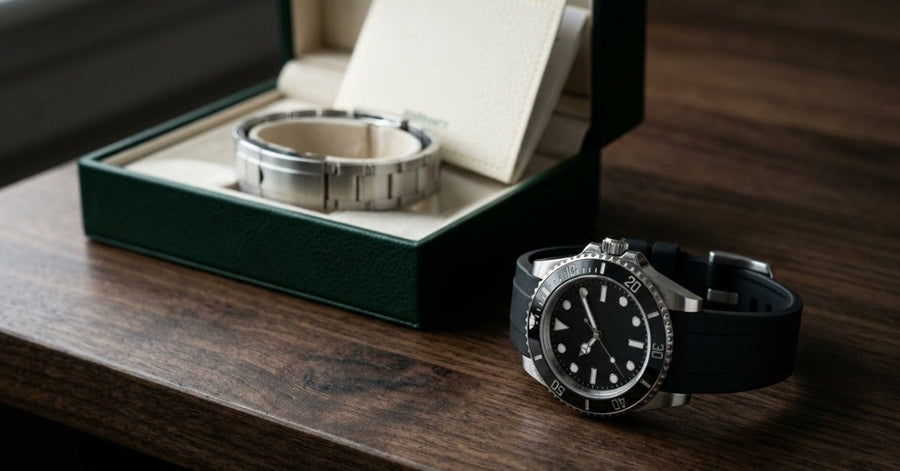
Rolex Submariner (40mm or 41mm). Curved-end FKM rubber in black, navy, or white. The Submariner case is designed around a curved fit and looks visibly better on curved-end rubber than straight-end. For mixed-summer use (water + dressier evenings), pair with the OEM Oyster bracelet for swap.
Rolex GMT-Master II (Pepsi, Batman, Sprite). Curved-end FKM in black, navy, or a colour pulled from the bezel (red for Pepsi, blue for Batman). Sailcloth also works and looks particularly good on travel-themed reference.
Rolex Daytona. Curved-end FKM in black or racing colours (green, red, white). The Daytona's motorsport heritage carries colour confidently. The Glidelock-equivalent rubber strap looks like an OEM upgrade.
Rolex Datejust (any reference). Black or navy curved-end FKM for casual summer. The Datejust is the most strap-versatile Rolex — rubber in summer, leather in winter, OEM bracelet for office. Avoid bright colours; the Datejust's classical register stays better with conservative summer rubber.
Rolex Day-Date / Cellini. Don't put rubber on these. They're dress watches; the right summer answer is to keep them on the OEM bracelet (Day-Date has Glidelock-equivalent micro-adjust on most modern references) or wear something else.
Cartier Santos. FKM rubber in the QuickSwitch fit if available, or aftermarket curved-end if your reference allows. Helvetus's Cartier-specific strap collection covers the Santos range in summer-appropriate colours and materials.
Cartier Tank (all variants). Don't put rubber on a Tank. Stay on the bracelet (if your reference has one) or accept that the Tank is a cooler-weather watch and rotate to a different watch for peak summer.
Cartier Pasha, Ballon Bleu, Ronde. FKM rubber works on Pasha and casual configurations; stay on the OEM strap for Ballon Bleu and Ronde unless you have a specific summer-rotation reason to switch.
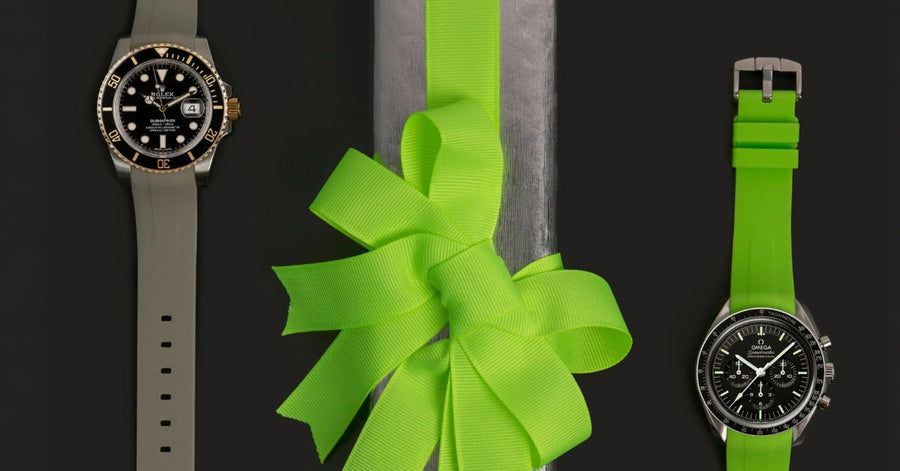
Omega Speedmaster Moonwatch. Black FKM rubber with white contrast detail (matches the dial's white registers), or NATO for the casual register. Both are summer-appropriate. The Speedmaster handles strap variety better than almost any other watch.
Omega Seamaster Diver 300M. Curved-end FKM in dial-matching colour. The Seamaster is a textbook summer dive watch — rubber is the obvious choice.
Omega Seamaster Aqua Terra. Either FKM rubber or sailcloth. The Aqua Terra's slightly more refined register suits sailcloth particularly well.
Tudor Black Bay (all sizes). FKM rubber, sailcloth, or NATO depending on register. Tudor's tool-watch heritage carries any of these confidently.
Tudor Pelagos. FKM rubber. The Pelagos is a serious dive watch and rubber matches the register cleanly.
Patek Aquanaut. OEM rubber or aftermarket CTS cut-to-size rubber. The Aquanaut was designed for rubber from inception (1997) and is the textbook example of "sport-luxury watch on rubber."
AP Royal Oak Offshore Diver. OEM rubber or premium aftermarket FKM in the case-matching curve.
IWC Big Pilot, Pilot. NATO or sailcloth for the pilot register. Rubber works but loses some of the watch's character.
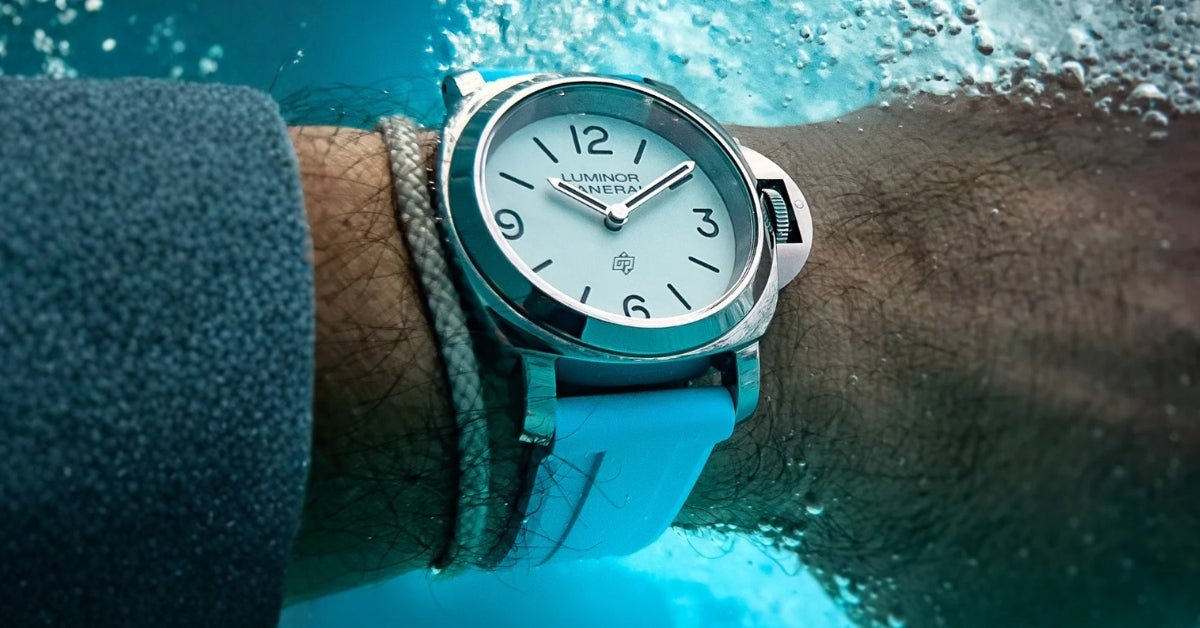
Panerai Luminor. FKM rubber in OEM or aftermarket curve. Panerai's case profile carries thick rubber straps better than almost any other watch.
Hublot Big Bang, Classic Fusion. FKM rubber matched to the watch's design language. Most modern Hublot references ship with rubber from the factory.
Tag Heuer Aquaracer, Carrera. FKM rubber for sport register; sailcloth for slightly dressier configurations.
If your specific reference isn't on this list, the simple decision tree: water-prone summer use → FKM rubber. Marine/sailing/coastal → sailcloth. Casual-heavy summer → NATO or denim. Office-summer with occasional heat → OEM bracelet plus FKM rubber for swaps.
Summer Strap Care: The Five-Minute Routine
Summer-worn straps need slightly more frequent care than cool-weather straps. The basics.
Rinse after water exposure. Saltwater and chlorine left on the strap to dry leave residue that, while not damaging to FKM, can develop a slightly tacky surface feel. 10 seconds under a tap solves this.
Wipe down after sweat-heavy days. A damp cloth removes surface residue and prevents salt buildup on the underside. Don't wait a week between cleans in summer.
Rotate where possible. A two-strap or three-strap rotation in summer extends the life of each strap dramatically. The same strap worn 7 days a week for three months ages much faster than two straps alternating.
Watch out for sunscreen and lotion residue. Apply sunscreen, wait 5 minutes for it to absorb into your skin, then put the watch back on. Avoiding direct sunscreen-to-strap contact extends strap life noticeably.
Don't leave straps in direct sun when not worn. A leather or sailcloth strap left on a sunny windowsill or dashboard for an afternoon will fade more in that one afternoon than in months of normal wear. UV is concentrated when there's no shade or movement.
Frequently Asked Questions
Can I wear leather in summer at all? For evenings, yes. For sustained daytime heat or direct sun, no. A leather strap worn to a dinner where you're indoors most of the time is fine. The same strap worn for an outdoor lunch in 30°C sun will accumulate visible damage by autumn. Reserve leather for indoor, evening, and cooler-weather wear in summer.
Will my OEM Rolex Oysterflex hold up in summer? Yes. Rolex Oysterflex is FKM rubber over a titanium spine and is rated for full water exposure, UV, and chemical resistance. It's specifically designed for the conditions of luxury sport watch summer wear.
Is white rubber a bad choice because of stains? White rubber can stain from indigo dye in new dark jeans (covered in our rubber-cleaning article) but is otherwise fine for summer use. Avoid wearing white rubber with new dark jeans for the first few weeks. Otherwise, white reflects heat and looks visibly summer-appropriate.
How often should I clean my summer rubber strap? Once every 1–2 weeks in heavy summer use. If you've been swimming, exercising, or in heavy heat, give it a quick rinse the same day. Standard cleaning routine (mild soap, soft toothbrush, rinse) takes five minutes.
Will my watch's water resistance be enough for summer pool and beach use? Check the rating. 100m water resistance handles surface swimming, snorkelling, and beach use. 50m handles surface swimming only — no diving or jumping in. 30m is splash-resistant only — no immersion. Most luxury sport watches (Submariner, Seamaster, Aquaracer, etc.) are 100m or higher; most luxury dress watches (Datejust, Tank, Calatrava) are 30–100m and should be treated cautiously around water regardless of strap.
Do summer-specific watches exist, or should I just change the strap? The strap is almost always sufficient. A "summer watch" is usually just a sport watch on rubber. If your existing watch is already a sport watch, swapping to FKM rubber gets you 95% of the way to a "summer watch" without the cost of a second piece.
Can I wear my luxury watch to the beach? With the right strap, yes. Rubber handles saltwater, sand, and sun without issue. Make sure the watch has at least 100m water resistance if you'll actually swim with it. Rinse with fresh water after beach use to remove salt and sand from the case gaskets and crown.
Should I take my watch off in extreme heat (40°C+)? For watch movement health: no, modern luxury watches handle extreme heat fine. For your own comfort and the strap's longevity: depends on strap. FKM rubber and steel are unaffected; leather and silicone benefit from removal during peak heat exposure. The watch case itself can sit in 40°C+ for hours without issue.
The Bottom Line
Summer is the season where the wrong strap costs you the most — leather degrades, bracelets pinch, silicone yellows. The right summer strap is almost always premium FKM rubber, in a colour that suits the watch and the situation. For watches that genuinely live in the marine register, sailcloth is the sophisticated alternative. For casual summer wear, NATO and denim cover the budget tier. For dress watches that don't take rubber, accept that they're cooler-weather pieces and rotate to a sport watch in summer.
The wrist-swelling problem is real and most articles ignore it. The solutions: tang-buckle straps with extra holes, micro-adjust deployants, OEM bracelets with Glidelock-equivalent extension, or CTS cut-to-size rubber that you can re-trim seasonally. Plan for 3–9mm of additional wrist circumference in peak summer.
For the £100–£300 budget, the highest-impact summer move is a quality FKM rubber strap engineered for your specific watch reference. It transforms how the watch wears in heat, handles every summer activity (water, sweat, sun, sunscreen), preserves the OEM bracelet from heavy summer use, and lasts 5–10+ years before any meaningful degradation. That's the right summer upgrade for almost every luxury watch owner.
Helvetus offers premium summer-ready straps across every appropriate material — curved-end FKM rubber cut for over 25 luxury watch references, straight-end FKM rubber in universal 20mm, 22mm and 24mm widths, CTS cut-to-size rubber for buyers who want to trim to summer wrist size, sailcloth for marine and dressier-summer use, and denim for casual register. All rubber straps backed by a lifetime warranty.
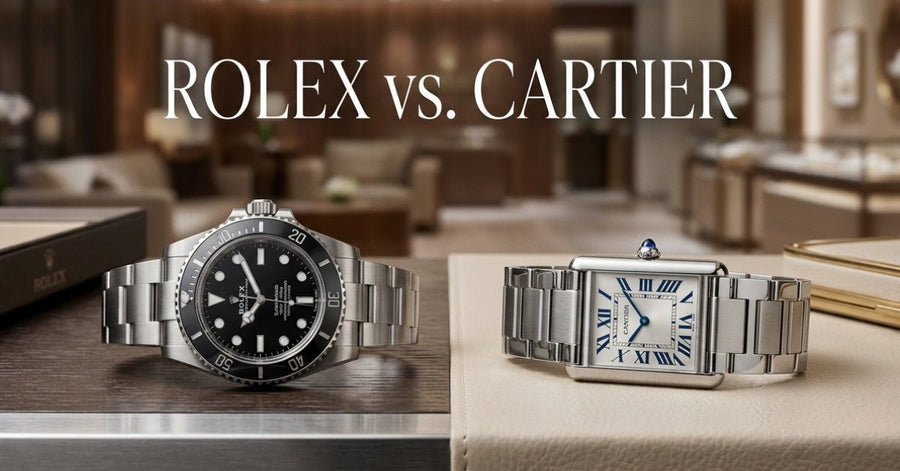
Most of our customers wear Rolex or Cartier — both well-served. The Rolex strap collection covers every Rolex sport reference (Submariner, GMT, Daytona, Sea-Dweller, Yacht-Master, Datejust, Day-Date) with curved-end FKM cut for each case profile. The Cartier strap collection covers Santos, Pasha, and Ballon Bleu in summer-appropriate configurations (Tank stays in cooler-weather rotation — wrong register for summer rubber). Browse the full range at helvetus.com, use our Strap Finder to match the right summer strap to your specific watch reference, or read more on the Helvetus blog.