


If you've ever bought a quality leather or rubber watch strap, you've come across the choice — tang buckle or deployant clasp? Most product pages mention it briefly, ask you to pick one before adding to cart, and move on. The two options affect comfort, security, how long the strap lasts, how the watch puts on and off your wrist, and how the watch sits when worn. They're different enough that the wrong choice will quietly bother you for the next year of wear, and right enough that the correct choice disappears from your attention entirely.
This guide covers what each closure actually is, how they evolved, the genuine differences in real wear, the variants of deployant clasp worth knowing, and a clear watch-by-watch and material-by-material recommendation for which to choose. By the end you should be able to look at any strap product page and know within ten seconds which closure is right for you.
What a Tang Buckle Actually Is
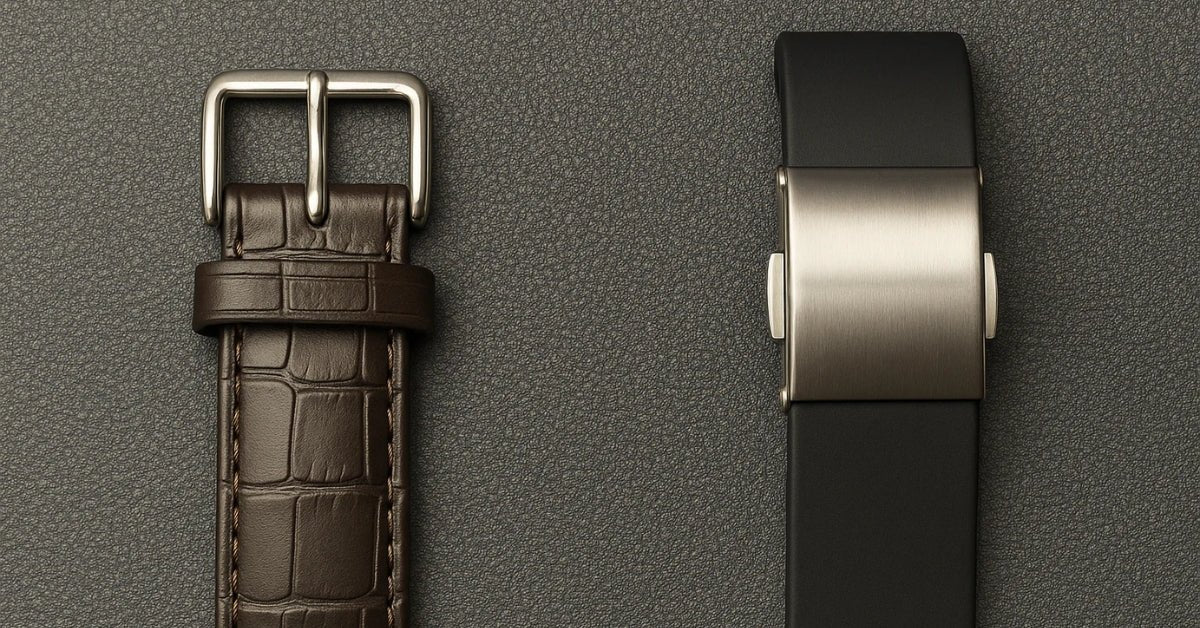
The tang buckle, also called a pin buckle or ardillon buckle ("ardillon" is the French word for "tongue"), is the simplest possible strap closure and one of the oldest fastening designs used on the wrist. It's mechanically identical to a belt buckle: a metal frame on one end of the strap, a pin (the "tang") that pivots from the frame, and a series of holes punched into the other end of the strap. To fasten, you pass the long end of the strap through the buckle frame, line up a hole with the pin, push the pin through, and the strap is held in place by friction between the pin and the hole walls.
It works on every strap material — leather, rubber, sailcloth, fabric, exotic leather. It costs almost nothing to manufacture. It's been the default watch strap closure since the wristwatch became a wristwatch in the early twentieth century, and the basic design has barely changed in a hundred years. About 80% of leather and rubber straps shipped today still use a tang buckle.
What it's good at: simplicity, comfort against the skin (a small pin and frame put very little metal against your wrist), low profile, easy adjustment (every hole is a separate sizing position), interchangeability (you can buy a replacement buckle and swap it onto any compatible strap). It's also light — a stainless steel tang buckle weighs around 3–6 grams.
What it's not good at: putting the watch on and off (every fastening cycle requires you to manage the strap's loose tail through keeper loops), strap preservation (the leather creases sharply at the buckle hole every time you fasten), and security against drops (during the moment between unbuckled and buckled, the watch is held only in your fingers).
What a Deployant Clasp Actually Is
The deployant clasp — sometimes called a deployment clasp or "boucle déployante" in the original French — is a folding metal closure that hinges open to release the strap and folds shut to fasten it. The mechanism is fundamentally different from a tang buckle: the strap doesn't pass through the closure on every wear, and the leather or rubber is never folded sharply at the buckle hole. The strap forms a continuous loop with the clasp providing the open/close mechanism on one side, usually the underside of the wrist.
Deployant clasps were patented by Louis Cartier in 1909 and first used on the Cartier Santos, specifically because the Santos was an aviation watch that needed a more reliable closure for active wear than the tang buckle could provide. Over a hundred and fifteen years of evolution have produced multiple variants, but the core principle has stayed the same: the strap forms a continuous loop, and the clasp opens and closes flat against the wrist.
What it's good at: putting the watch on and off (fold the clasp open, slide the wrist in, close the clasp — the strap stays one piece throughout), strap preservation (no repeated bending at the buckle hole means leather and rubber straps last several times longer), security (the watch is physically held by the strap loop at every moment, including during the open-close cycle), and look on the wrist (a well-designed deployant gives a clean, integrated finish without a visible loose strap tail).
What it's not as good at: comfort against the skin (a metal clasp is necessarily larger and harder than a tang buckle frame), profile (deployant clasps add 3–8mm of thickness to the underside of the strap), micro-adjustment (most deployant clasps are sized to a specific length and don't allow for the every-hole sizing of a tang buckle), and cost (a quality deployant adds £40–£200+ to the strap price compared to a tang buckle equivalent).
The Real Differences: Five Categories That Matter
Strip away the marketing on either side and the two closures differ in five genuine ways.
1. Strap longevity. This is the deployant's strongest argument and where most of the case for it lives. A tang buckle forces the strap to fold sharply at the buckle hole every fastening cycle. Over months and years, that fold creates a permanent crease, and eventually the crease cracks. The strap fails at the buckle hole 90% of the time. A deployant clasp eliminates the fold entirely — the strap maintains its continuous loop curvature regardless of whether the clasp is open or closed. Daily-wear leather straps that last 12–18 months on a tang buckle routinely last 3–5+ years on a deployant. For premium leather and exotic-skin straps where the cost is meaningful, this lifespan extension by itself often justifies the deployant.
2. Drop safety. During the moment between fully unbuckled and fully buckled, a tang-buckle strap holds the watch only by your fingers. A slip in that window means the watch hits whatever surface you're over — desk, tile, concrete, hard floor. Multiple watch enthusiasts have shared documented stories of cracked crystals, dented cases, and bent crowns from exactly this scenario. A deployant clasp eliminates the slip window entirely. The strap is one continuous loop at every moment, including the open-close cycle, so a fumble means the watch dangles momentarily but doesn't fall.
3. Comfort. This is where the tang buckle wins. A tang buckle is small, light, and curves naturally with the wrist. A deployant clasp is larger, heavier, and necessarily flat across a section of the underside of the wrist. On smaller wrists or on watches with thin straps where the deployant feels disproportionate, the clasp can dig in or sit awkwardly during long wear. On larger wrists with substantial straps, a well-designed deployant is genuinely comfortable — but the threshold for "well-designed" is real, and cheap deployant clasps can have sharp edges, poorly-radiused corners, or push-button mechanisms that press into the underside of the wrist.
4. Convenience. Deployant wins clearly. Putting on and off a watch with a deployant takes about 3 seconds — open the clasp, slide the watch on, close the clasp. The tail of the strap doesn't need to be managed because it isn't loose. With a tang buckle, fastening involves threading the strap tail through the buckle, lining up the right hole, securing the pin, then tucking the tail through the keeper loops. It's not difficult, but it adds 15–30 seconds per wear and is genuinely fiddly for people with arthritis, dexterity issues, or when fastening one-handed.
5. Sizing flexibility. The tang buckle wins. Each hole on the strap is a separate sizing position — typically 6 to 9 holes, giving you 3–4mm of adjustment at every step. If your wrist swells slightly in summer or shrinks in winter, you can move up or down a hole. A deployant clasp is generally sized to a single fixed length when fitted to your wrist, with most designs offering only 1–3 small adjustment positions. Wrist swelling on a hot day is harder to accommodate. Some premium modern deployants address this with built-in micro-adjustment systems (Rolex Glidelock, Omega's diver extension, certain Patek deployants), but most aftermarket and OEM deployants don't.
The Variants of Deployant Clasp Worth Knowing
If you decide on deployant, the next decision is which type. Three main variants dominate the market.
Single-fold deployant. One hinged section that folds flat against the underside of the wrist. The simplest deployant design. Lower profile than butterfly variants, generally more comfortable on smaller wrists, and the closest in look to a tang buckle from the topside view. The Cartier classic deployant is single-fold. Most modern aftermarket deployants are also single-fold. Best for: dressy and dressy-casual watches, smaller wrists, and anyone who wants the deployant benefits without the bulk.
Butterfly clasp. Two symmetrical hinged sections that fold open from a central axis (hence "butterfly"). The strap appears unbroken from the topside because the entire mechanism hides on the underside. Visually the cleanest and most "invisible" deployant variant. Slightly more complex mechanically, slightly thicker than single-fold, and offers a wider opening that makes the watch easier to put on. Best for: larger watches, larger wrists, and anyone who wants the most invisible look on the topside.
Push-button (or push-piece) deployant. Either single-fold or butterfly with side-mounted buttons that release the clasp mechanism. The buttons add a positive lock — the clasp can't accidentally open from incidental contact. The most secure variant and the one most often used by serious dive watch and sport watch deployants (Rolex Glidelock, Omega clasps, IWC sport deployants). Slightly bulkier than non-push-button equivalents because of the button mechanism. Best for: dive watches, sport watches, and anyone for whom maximum security matters.
A fourth variant worth mentioning: the micro-adjust deployant, which combines either of the above with a sliding or stepped extension mechanism that allows fine-tuning the strap length without removing the strap. Rolex's Glidelock (5mm of stepped extension), Omega's diver extension, and similar premium systems address the sizing-flexibility weakness of standard deployants. These are typically only available as OEM components, though some aftermarket deployants now offer micro-adjust functionality.
Material-Specific: Which Closure for Which Strap
The right closure depends partly on the strap material.
FKM rubber straps. Either works, but the case for tang buckle is stronger. Rubber doesn't crease the way leather does, so the strap-longevity argument for deployant is weaker. Tang buckles are significantly lighter on rubber straps, which preserves the lightness benefit that's a major reason to switch to rubber in the first place. Deployants on rubber make sense for premium-tier rubber on a watch where the dressy register matters (a black FKM strap on a Datejust on a deployant), but for sport-and-water use, tang is usually the right call. Quick-release spring bars on a tang-buckle rubber strap give you the fastest possible swap experience.
Calfskin and standard leather straps. Either works. The strap-longevity argument for deployant is strongest here — leather straps fail at the buckle hole more reliably than any other material. If the strap is daily-wear premium calfskin where the cost matters, a deployant pays for itself in extended lifespan. If the strap is in a casual rotation or being worn occasionally, a tang buckle is fine and more comfortable for most wrist sizes.
Alligator and exotic leathers. Deployant strongly preferred. These are the most expensive straps you'll buy (£200–£500+ for premium alligator), and the lifespan extension from a deployant can multiply the strap's useful life by 3–5x. The deployant also fits the dressier register of exotic leather — alligator on a deployant looks more refined than alligator on a tang buckle on most dress watches. Cartier, Patek, Vacheron, Lange, and other top-tier dress watch makers default to deployants on their alligator straps for this reason.
Sailcloth. Either works, slight lean toward tang. Sailcloth is the in-between material that lives across registers, and tang buckles preserve the slightly casual marine character of the material. Deployants on sailcloth can read as overdressed for the watch's typical use case.
Suede. Tang buckle preferred. Suede is rotation strap territory — worn occasionally rather than daily — and the longevity argument for deployant is therefore weaker. Tang buckles also let the suede sit more naturally without the structural rigidity a deployant adds.
Ostrich and specialty leathers. Deployant for daily wear, tang for rotation pieces. Same logic as alligator on cost-protection grounds.
Denim, NATO, and woven specialty. Tang buckle only. The casual register of these materials is fundamentally incompatible with a deployant clasp.
Watch-Specific: Which Closure for Which Reference
Some watches have strong conventions about which closure is correct.
Rolex Submariner, GMT-Master II, Daytona, Sea-Dweller, Yacht-Master, Sky-Dweller. Most aftermarket rubber goes on tang buckle (matching the OEM Oysterflex's Glidelock-equivalent style or going with a simple tang for sport use). Aftermarket leather can go either way; tang slightly preferred for lightness on Rolex sport cases.
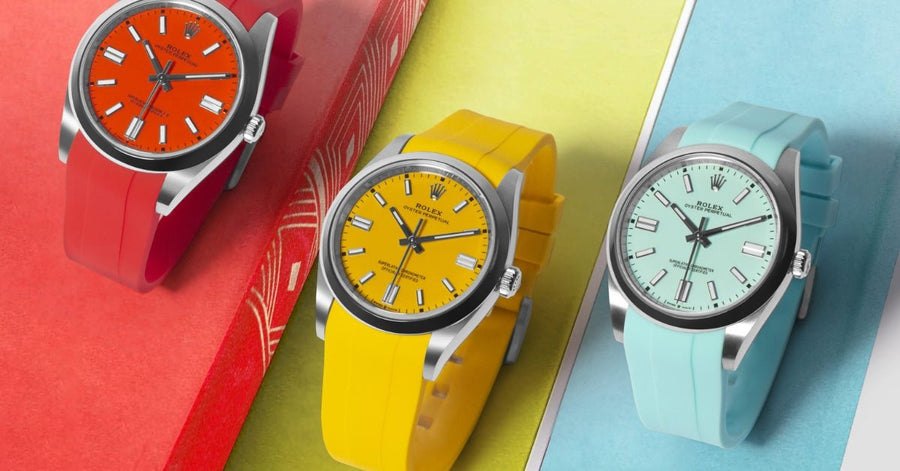
Rolex Datejust, Day-Date, Cellini. Deployant preferred for dress occasions, tang acceptable for everyday. The Day-Date specifically looks better on a deployant — it's a textbook dress watch.
Cartier Santos. Modern Santos uses Cartier's QuickSwitch system which is a proprietary deployant. Aftermarket alternatives can use either tang or deployant; deployant matches the OEM register slightly better.
Cartier Tank (all variants). Deployant strongly preferred. Tank is a textbook dress watch and the strap is almost always alligator or calf — both of which benefit most from deployant. Tang buckle on a Tank is acceptable but reads as less considered.
Cartier Pasha, Ballon Bleu, Ronde. Either works, lean toward deployant for dress use.
Omega Speedmaster Moonwatch. Tang buckle is the textbook pairing — the Speedmaster's tool-watch heritage is built around a leather strap with a simple tang buckle. Deployant works for daily-wear preservation but loses some of the watch's character.
Omega Seamaster Diver 300M, Aqua Terra. Tang for sport rubber, either for leather. Most modern Seamaster owners prefer tang on rubber for the Glidelock-style look.
Tudor Black Bay (all sizes), Pelagos. Tang for rubber and sailcloth, either for leather. Tudor's tool-watch register matches tang slightly better.
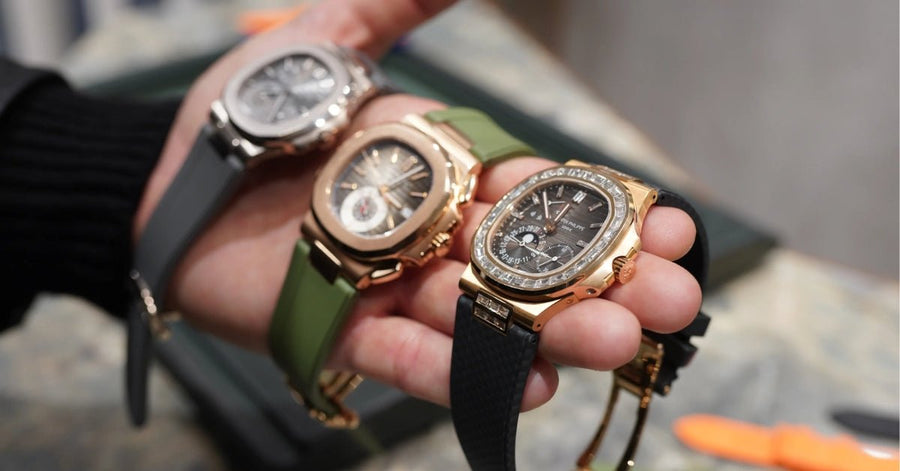
Patek Calatrava, Aquanaut, Nautilus. Deployant strongly preferred — Patek's OEM straps come with deployant as standard, and the dressy register of Patek watches benefits from the cleaner finish.
AP Royal Oak, Royal Oak Offshore, Code 11.59. Mostly deployant, especially on the Offshore and 11.59 references where AP supplies factory deployants.
Vacheron Patrimony, Overseas, Lange Saxonia, JLC Master Ultra Thin, JLC Reverso. Deployant. These are dress watches where deployant is the textbook choice.
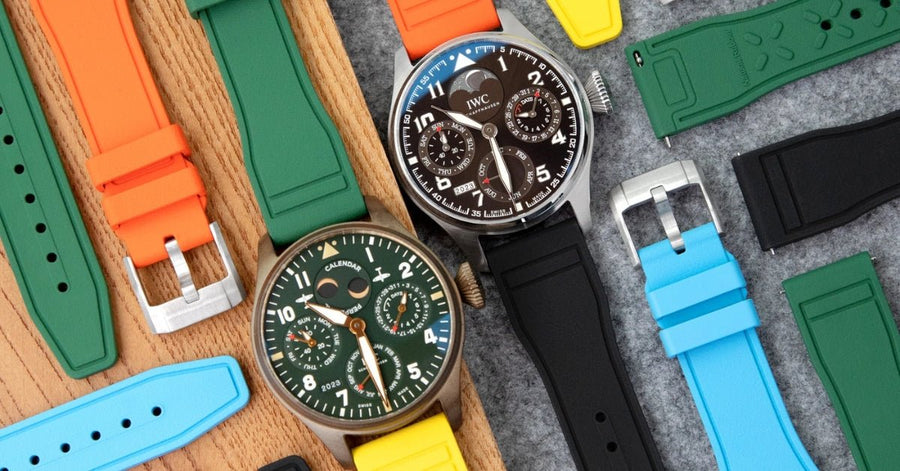
IWC Pilot, Big Pilot. Tang buckle is the textbook pairing for the pilot watch register. Deployant works for daily preservation but loses character.
Panerai Luminor, Submersible. Tang buckle traditional, deployant available as upgrade. Most Panerai owners stay with tang to match the watch's military character.
Hublot Big Bang, Classic Fusion. Deployant — Hublot's OEM straps are deployant by default and the watches look correct on it.
Tag Heuer Carrera, Aquaracer, Monaco. Tang preferred for sport register; deployant acceptable for dressier configurations.
Breitling Navitimer, Avenger, Superocean. Tang traditional; OEM Breitling deployant works but is fairly bulky.
If your watch isn't on this list, the simple test: look at the OEM strap. If it came with a deployant from the factory, the watch is "designed" for deployant, and aftermarket deployant matches the original look. If it came with a tang, either works — pick based on the material and your priorities.
When to Get a Replacement Buckle Separately
A small but useful trick most strap buyers don't know: the buckle and the strap are separate components, and you can mix-and-match. If you have a strap with a tang buckle and want to upgrade to a deployant, you can buy a deployant clasp separately (£40–£200+ depending on quality) and swap it onto your existing strap. Same goes the other direction.
This matters because:
- Many premium watches have signed OEM buckles (the brand logo on the buckle) that are worth keeping. You can transfer that OEM buckle onto an aftermarket strap rather than buying the OEM strap.
- A single quality deployant can rotate across multiple straps if the buckle widths match.
- If your existing strap has a deployant you don't like, you don't have to replace the whole strap — just the clasp.
The width matters. A buckle is sized to the buckle end of the strap (the narrow end after taper), not the lug end. A 22/18mm strap (22mm at the lugs, 18mm at the buckle) needs an 18mm buckle. Always verify the buckle width matches the strap's buckle end before ordering.
Frequently Asked Questions
Will a deployant clasp damage my strap? No, the opposite. A deployant clasp eliminates the repeated bending stress that destroys most straps. A leather strap on a deployant typically lasts 3–5x longer than the same strap on a tang buckle. The clasp itself doesn't contact the leather in any wear-creating way.
Are deployant clasps actually safer than tang buckles? Yes, for the open-close cycle specifically. A deployant keeps the strap as one continuous loop at all moments, so a fumble during fastening doesn't drop the watch. A tang buckle has a brief window where the strap is fully open and the watch is held only in your fingers. Multiple watches have been broken in exactly this window — search any watch forum and you'll find the stories.
Are deployant clasps more comfortable than tang buckles? Generally no, especially for smaller wrists. A tang buckle is smaller, lighter, and curves with the wrist. A deployant is larger, heavier, and flat. On larger wrists with substantial watches, a well-designed deployant is comfortable. On smaller wrists, tang is usually more comfortable.
Can I install a deployant on any leather strap? Yes, with two conditions. First, the buckle width has to match the strap's buckle end. Second, the strap doesn't have a permanent factory-attached buckle (rare but possible — most quality straps have removable buckles). Check the strap's spring bar attachment at the buckle end before ordering a separate deployant.
Why do deployant clasps cost so much more than tang buckles? Manufacturing complexity. A tang buckle is two or three pieces of folded steel. A deployant is 8–15 precisely-machined pieces with hinges, springs (in push-button variants), and assembly tolerances tight enough that the mechanism feels solid in use. Premium OEM deployants from Rolex, Patek, and AP can cost £400–£1,500+ as separate parts because of the precision involved.
Should my deployant be the same metal finish as my watch case? Generally yes. Brushed steel deployant for brushed cases, polished for polished, gold-tone for gold cases. Mismatched finishes are visible from any normal angle and read as cheap. Two-tone watches are an exception — the deployant should match the dominant case metal, not the accent.
Do quick-release spring bars work with both tang buckle and deployant straps? Yes. Quick-release affects how the strap attaches to the watch lugs, not how the strap fastens at the buckle end. A strap can have quick-release at the lugs and either a tang or deployant at the closure.
If I have a deployant clasp, do I still need keeper loops? No. The strap forms a continuous loop with no loose tail, so there's nothing for keepers to hold. Most strap makers ship deployant straps without keepers. Tang-buckle straps need keepers because there's a loose tail to manage.
Is a deployant clasp more secure for diving and water sports? A push-button deployant is more secure than a tang buckle, yes. But for serious dive use, the more important factor is having a strap material rated for water (FKM rubber or sailcloth, not leather), correct length to fit over a wetsuit cuff, and properly-sized spring bars at the lugs. The closure type matters less than these other factors.
The Bottom Line
The honest answer is that tang buckles and deployant clasps are different tools for different jobs, and the "winner" depends on the strap material, the watch's register, and your priorities. The deployant wins on strap longevity, drop safety, and convenience. The tang buckle wins on comfort, sizing flexibility, and weight. Cost favours the tang; long-term economics favour the deployant.
The simplest decision framework:
For premium leather and exotic-skin straps where lifespan matters → deployant clasp. For rubber, sailcloth, and casual-register straps → tang buckle. For dress watches where the OEM came with a deployant → deployant. For sport and tool watches where the OEM came with a tang → tang. When in doubt about the right register for a specific watch → match the OEM closure.
If you're building a strap wardrobe, a reasonable approach is tang buckles on the rubber/sailcloth/casual pieces (lower wear stress, lower cost, more comfortable) and deployants on the alligator/calfskin/exotic dress pieces (lifespan protection, dressier finish, watchmaker-default look). That gives you both closure types in your rotation, each on the strap material it serves best.
Helvetus offers both tang buckle and deployant clasp options across our curved-end FKM rubber, straight-end FKM rubber, calfskin leather, alligator, sailcloth, suede, and ostrich collections — engineered to fit the case profiles of every major luxury watch reference. Buckle hardware is available in brushed steel, polished steel, and gold-tone finishes to match your watch case, with quick-release spring bars as standard.
Most of our customers wear Rolex or Cartier. The Rolex strap collection covers the full range of closure options — tang buckles for sport-watch rubber, deployants for dressier Datejust and Day-Date references. The Cartier strap collection leans deployant for the Tank and dressier references where the OEM convention is deployant, with tang options for Santos and casual configurations. Browse the full range at helvetus.com, use our Strap Finder to match the right closure to your specific watch reference, or read more on the Helvetus blog.